

Japanese Folding Knives: Craft, Materials and the SUWADA Damascus Knife
Apr 03, 2024
A Japanese folding knife is a compact knife whose blade folds into the handle, made in Japan by makers using a wide range of materials and constructions. SUWADA's current folding-knife range combines compact proportions with handles in natural wood, Micarta or forged Damascus steel.
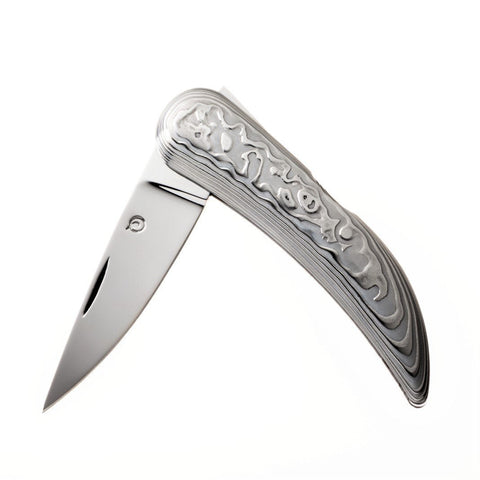
If you are looking specifically at SUWADA's Damascus model, one detail is important from the start: the Damascus steel is used for the handle, while the blade is Japanese cobalt stainless steel polished to a mirror finish.
Why Sanjo matters to SUWADA
SUWADA is based in Sanjo, Niigata, part of the Tsubame-Sanjo metalworking region. Sanjo City's own history traces the area's blacksmithing tradition to the early Edo period. Frequent flooding made farming difficult, and nail blacksmiths from Edo were invited to teach local farmers how to make Japanese nails as a secondary trade. Over time, the area's metalworking expanded from nails into saws, sickles, knives and other tools.
Today Tsubame-Sanjo is known for a broad concentration of metalworking skills, including cutting tools, work tools, metal tableware and other precision products. That history does not mean every modern product is made in an old form; it provides the industrial and craft context in which companies such as SUWADA work.
What is special about the SUWADA Damascus folding knife?
The SUWADA Damascus folding knife is a heavy, fully metal folding knife made in Japan. According to SUWADA Japan, its handle is created from layers of steels with different hardness. After forging, the handle is polished by hand so the layered pattern becomes both visible and tactile.
There is no chrome or decorative coating on the handle. The pattern and texture come from the forged material and the polishing process itself. Because the layered pattern varies, each handle is slightly different.
The blade is a separate component. It is made from Japanese cobalt stainless steel and polished by hand to a mirror finish. This distinction matters because the model is sometimes described simply as a "Damascus knife", which can imply that the blade itself is Damascus steel. On this SUWADA model, the defining Damascus feature is the handle.
Size, weight and construction
The Damascus model has a 60 mm blade, a blade thickness of 3 mm and an overall open length of 160 mm. It weighs approximately 150 g and is supplied in a black metal storage case.
That weight gives it a noticeably more substantial feel than SUWADA's current wood- and Micarta-handled Masterpiece folding knives, which use the same compact 60 mm blade format but weigh approximately 140 g.
How does it differ from SUWADA's other folding knives?
SUWADA's current folding-knife range is built around three material directions:
- Damascus steel: the heaviest and most tactile all-metal option, with a forged layered-steel handle.
- Natural wood: Ebony, Bocote, Rosewood (shitan) and Maple, each with naturally varying grain.
- Micarta: Black, Red and White layered handles with a more graphic, contemporary appearance.
The current wood and Micarta models use a 60 mm ATS-314 cobalt-alloy stainless-steel blade. Rather than treating one material as universally better, it makes more sense to choose by the handle material, appearance, weight and maintenance you prefer.
Compare the full SUWADA folding-knife range.
How to care for the Damascus folding knife
Wipe the knife clean and dry after use. The Damascus steel handle is uncoated, so avoid leaving it damp or exposing it to prolonged moisture. Do not put the knife in a dishwasher.
The knife contains a sharp blade. Rules on purchase, importation, possession and carrying vary by country and sometimes by region, so check the law that applies where you live or travel.
Frequently asked questions
Is the blade made from Damascus steel?
No. On this SUWADA model, the handle is forged Damascus steel. The blade is Japanese cobalt stainless steel with a mirror-polished finish.
Why does the handle pattern vary?
The handle is made from forged layers of different steels and finished by hand. The resulting layered pattern is not identical from one knife to another.
How large is the SUWADA Damascus folding knife?
The blade is 60 mm long and 3 mm thick. The knife measures 160 mm overall when open and weighs approximately 150 g.
Where is it made?
The knife is made in Japan. SUWADA is based in Sanjo, Niigata, within the Tsubame-Sanjo metalworking region.
Where can I compare the other SUWADA folding knives?
See the Folding Knives collection for the current Damascus, natural-wood and Micarta models.
Sources for the historical and manufacturing details in this article include SUWADA Japan's Damascus Collection information and official Sanjo/Tsubame-Sanjo regional material.
Related folding-knife guides
- How Do You Clean a Folding Knife?
- How Do You Sharpen a Folding Knife?
- Does Damascus Steel Rust?
- Micarta vs Wood vs Damascus Steel
Practical folding-knife care
For day-to-day ownership, see our guides to cleaning a folding knife, sharpening a folding knife, Micarta, wooden-handle care and Damascus steel and corrosion.

