



Showing
3
of
3
Choose by arrangement
Which kenzan do you need?
Mini arrangements
Lightweight suction
Compare the range
Compare the current kenzan families
Three current families cover three distinct jobs: weighted stability, miniature placement and lightweight suction.
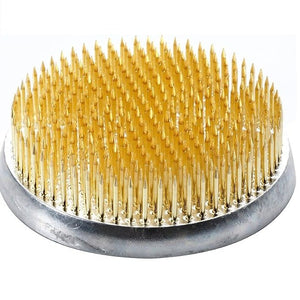
Traditional
 HANAKATSU
from $58.00
HANAKATSU
from $58.00
|
Small arrangements
 Mini
$43.00
Mini
$43.00
|
Lightweight
 AIRIN
from $21.00
AIRIN
from $21.00
|
|
|---|---|---|---|
| Best for | Everyday ikebana & larger arrangements | Tiny vessels & separate stem groups | Beginners & smooth vessels |
| Construction | Weighted lead base with brass pins | Four small weighted kenzan | Polycarbonate body and pins |
| Current sizes | 61 / 80 / 90 mm | 2 round + 2 square | 53 / 78 mm |
| Stability | Highest stability in the current range | Use individually or together | PVC suction-base stability |
| Vessel fit | Bowls and open vessels | Small bowls and minimal arrangements | Smooth-bottom vessels |
| Why choose it | The standard traditional choice | Flexible support for small placements | Lightweight alternative to a metal base |
|
|
|
|

HANAKATSU
from $58.00
- Best for
- Everyday ikebana & larger arrangements
- Construction
- Weighted lead base with brass pins
- Current sizes
- 61 / 80 / 90 mm
- Stability
- Highest stability in the current range
- Vessel fit
- Bowls and open vessels
- Why choose it
- The standard traditional choice

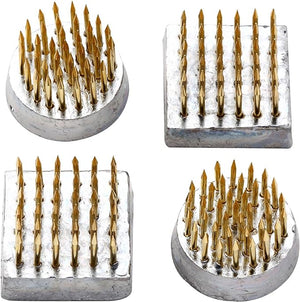
Mini
$43.00
- Best for
- Tiny vessels & separate stem groups
- Construction
- Four small weighted kenzan
- Current sizes
- 2 round + 2 square
- Stability
- Use individually or together
- Vessel fit
- Small bowls and minimal arrangements
- Why choose it
- Flexible support for small placements

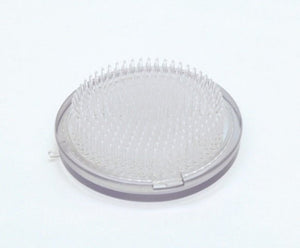
AIRIN
from $21.00
- Best for
- Beginners & smooth vessels
- Construction
- Polycarbonate body and pins
- Current sizes
- 53 / 78 mm
- Stability
- PVC suction-base stability
- Vessel fit
- Smooth-bottom vessels
- Why choose it
- Lightweight alternative to a metal base
Frequently asked questions
What is a kenzan?
A kenzan is a bed of metal pins used to hold flower and plant stems in position for ikebana and other floral arrangements. It gives the arranger control over angle, spacing and structure without floral foam.
Is a kenzan the same as a flower frog?
A kenzan is one type of flower frog: a Japanese pin holder used to secure stems and control their angle. The English term flower frog is broader and can also describe other devices used to hold flower stems in position.
What size kenzan should I choose?
Choose the size according to the vessel and the scale of the arrangement. A larger or heavier kenzan gives more stability for larger compositions, while smaller formats suit compact vessels and lighter arrangements.
How do I use a kenzan?
Place the kenzan securely on a suitable flat area of the vessel, add water so the cut stems can reach it, trim the stems cleanly and press them onto the pins with control. Start upright, then adjust the angle once the stem is held. Larger or heavier plant material needs enough kenzan weight and base area to remain stable.
Weighted kenzan or suction kenzan: what is the difference?
A traditional weighted kenzan stays in place through its own mass. AIRIN is lighter and uses a suction cup, so it works best on a suitable smooth surface where the suction cup can hold securely.
Can a kenzan scratch a vase?
A kenzan has sharp pins and a firm base, so handle it carefully in delicate vessels. If the vessel surface is sensitive, use an appropriate protective layer beneath the kenzan and place it gently.
How do I clean and store a kenzan?
Rinse away plant material after use, handle the pins carefully and allow the kenzan to dry before storage. For suction models, also check that the suction cup is clean and secure before the next arrangement.

